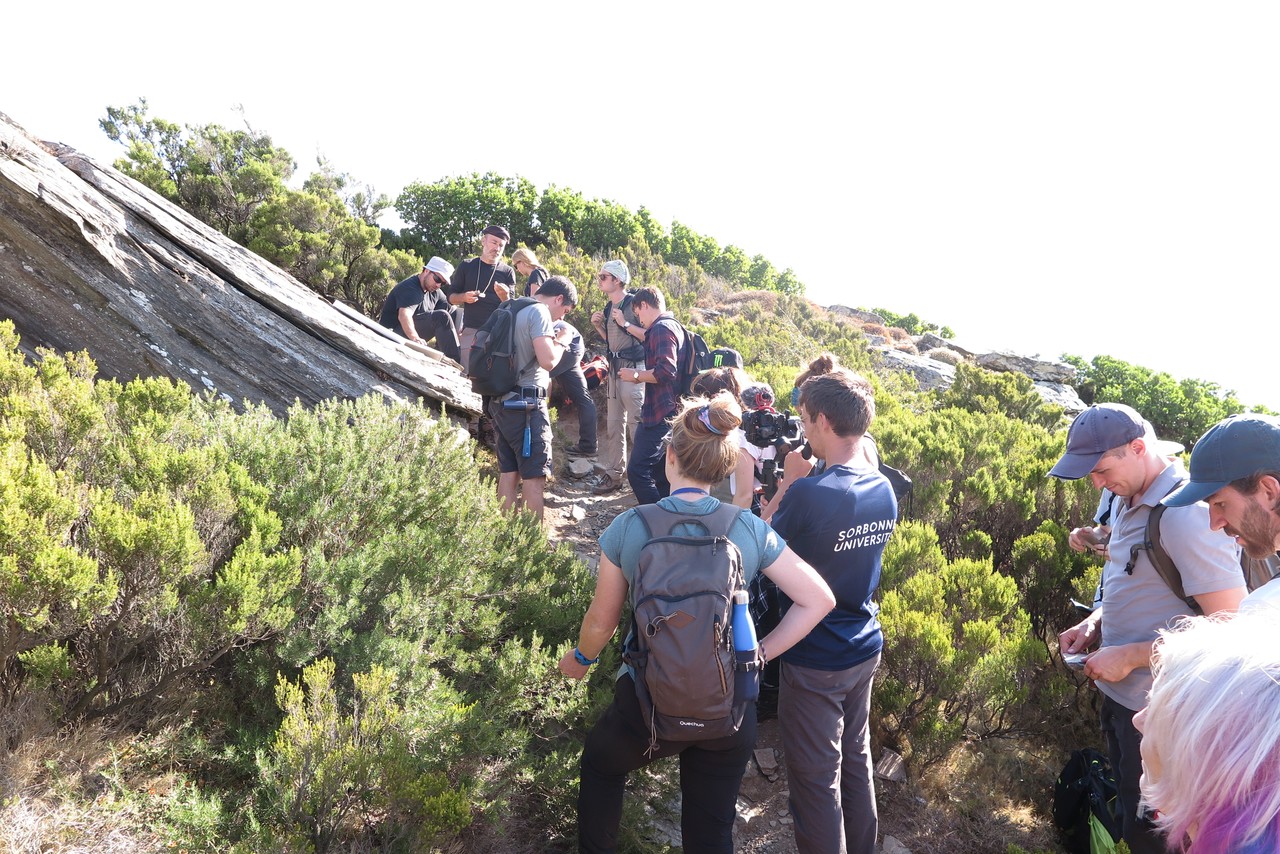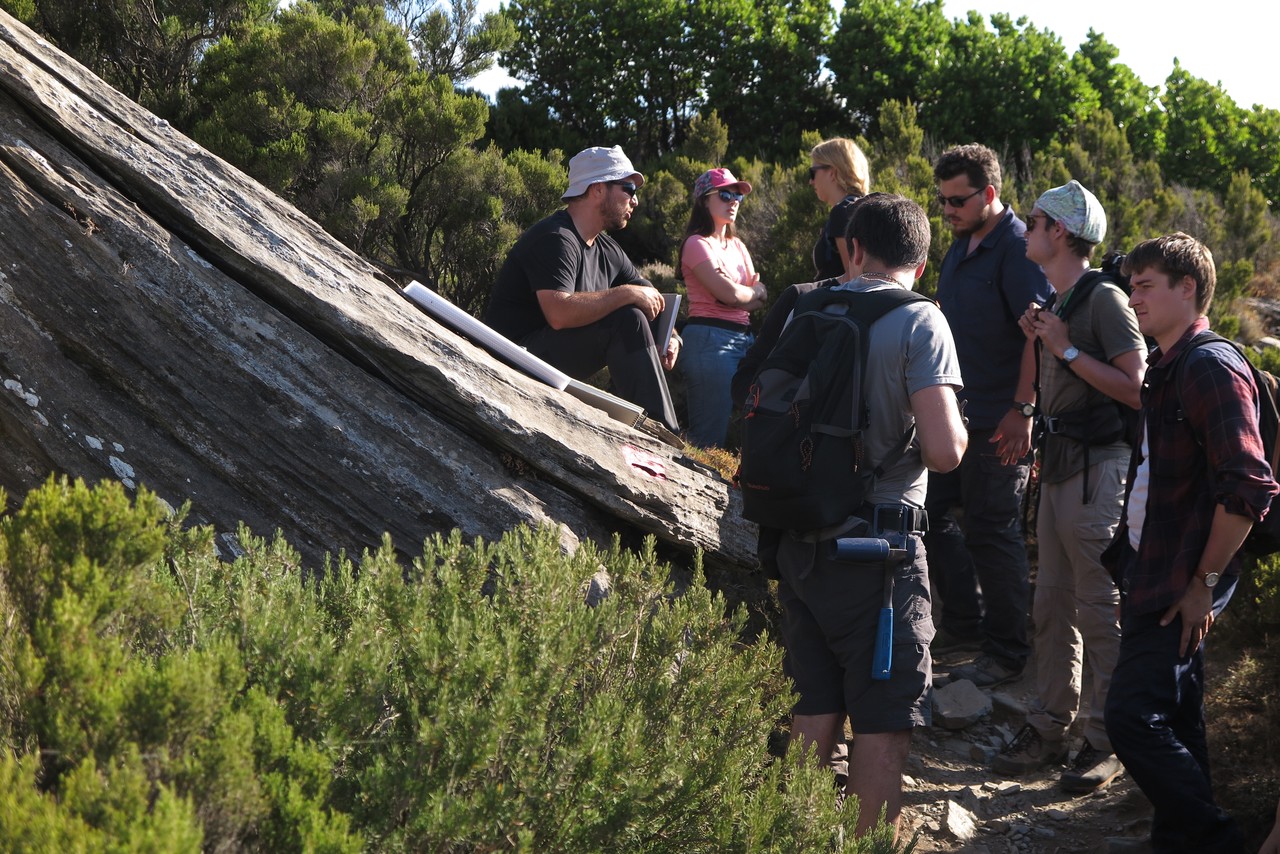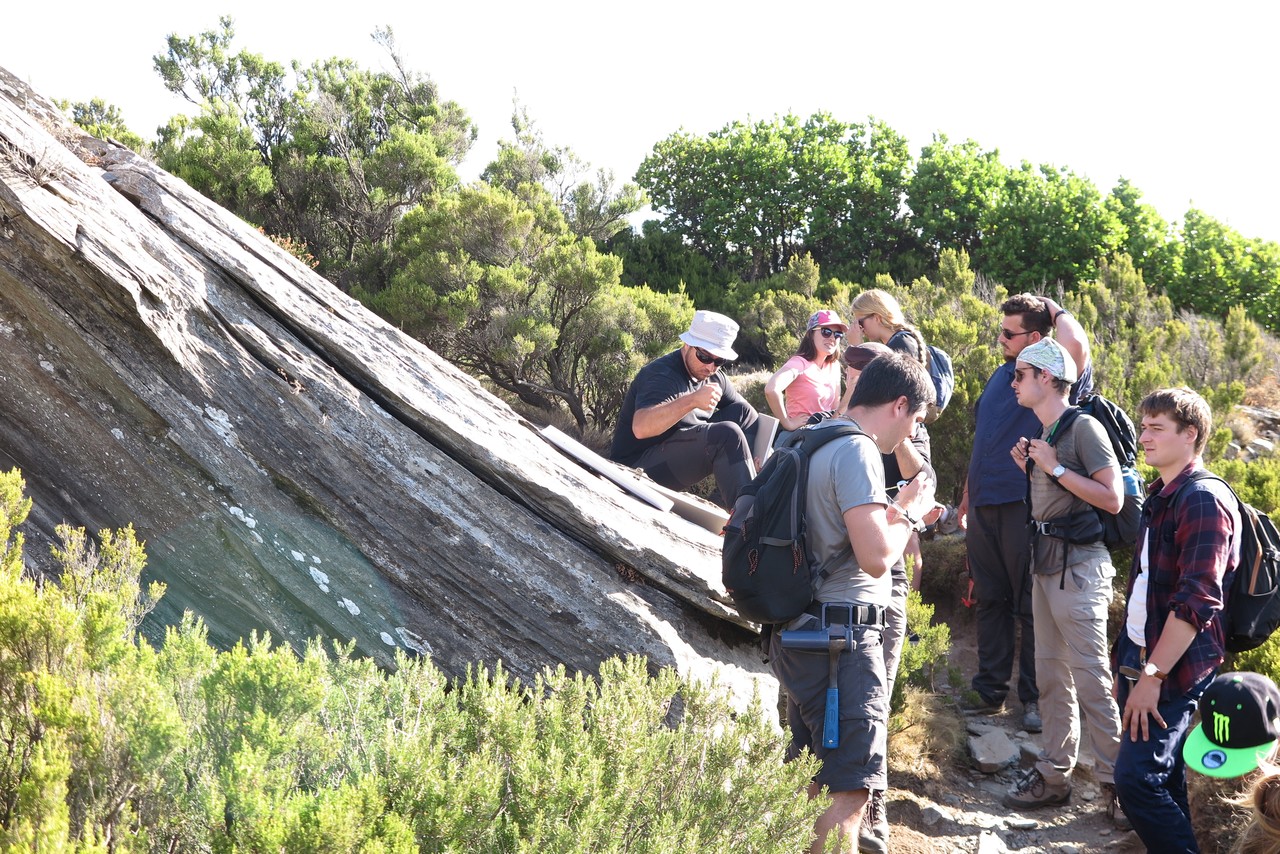
In this outcrop (in fact located just between stops S1-6 and S1-7), we can observe metasediments that directly overlie the serpentinites (and probably the gabbros as well) along an unconformity. The metasediments are well-stratified and with silty grain size. Some layers are siliceous and consist of white mica, feldspar, quartz, and some amphibole. Most other layers are carbonate-rich, and the transitions between both end-members are gradual.
The existence of direct stratigraphic contact between these oceanic sediments and the serpentinites reveals that the magmatic crust was absent in places at the time of deposition, suggesting that the fragments of oceanic domain preserved here once belonged to a slow-spreading ocean (i.e., one with only limited magmatic production, such as the Atlantic ocean today). The age of high-pressure low-temperature metamorphism of the rock, hence the age of subduction, was dated as early Eocene by isotopic analysis on white mica and amphibole.