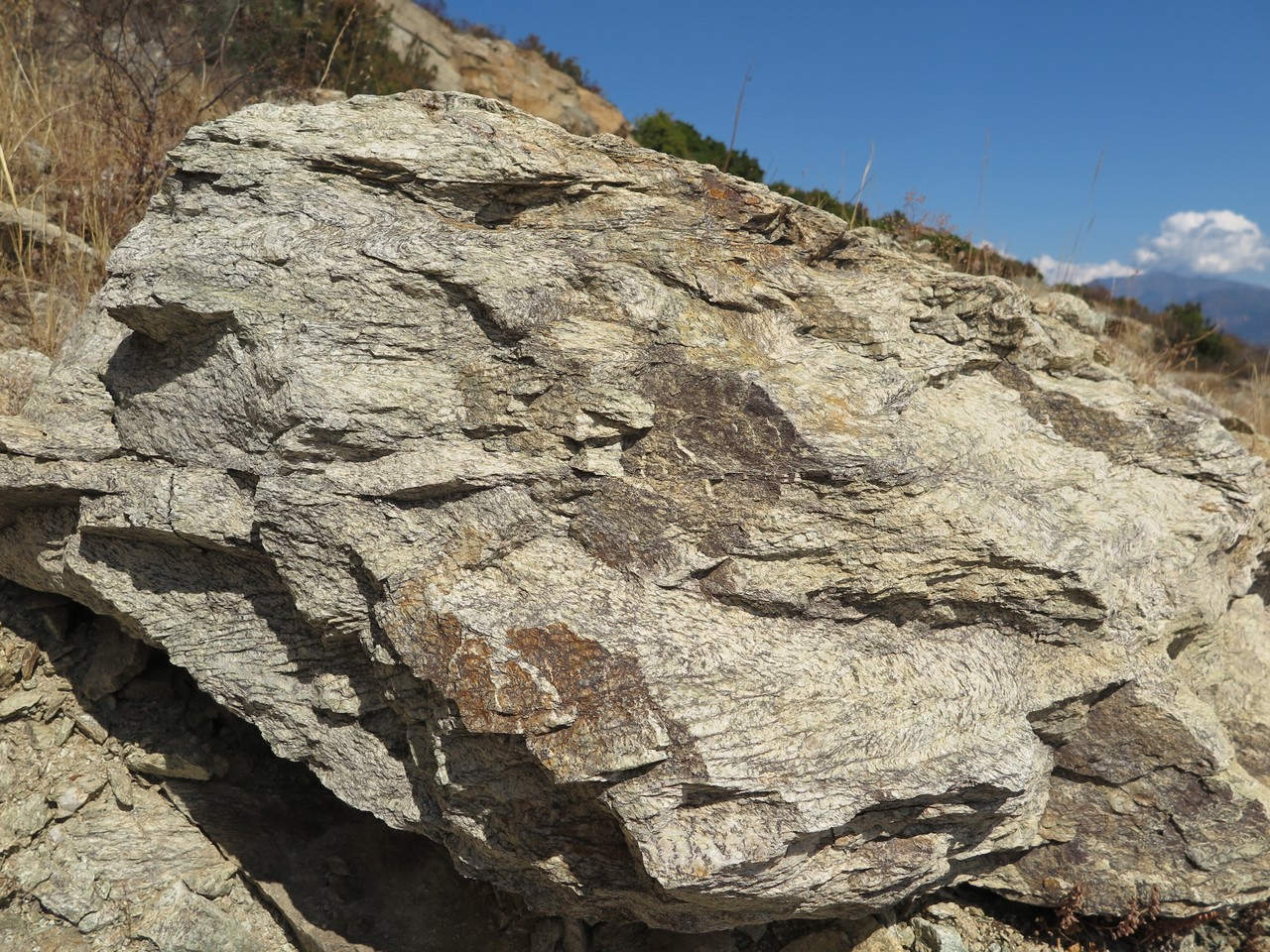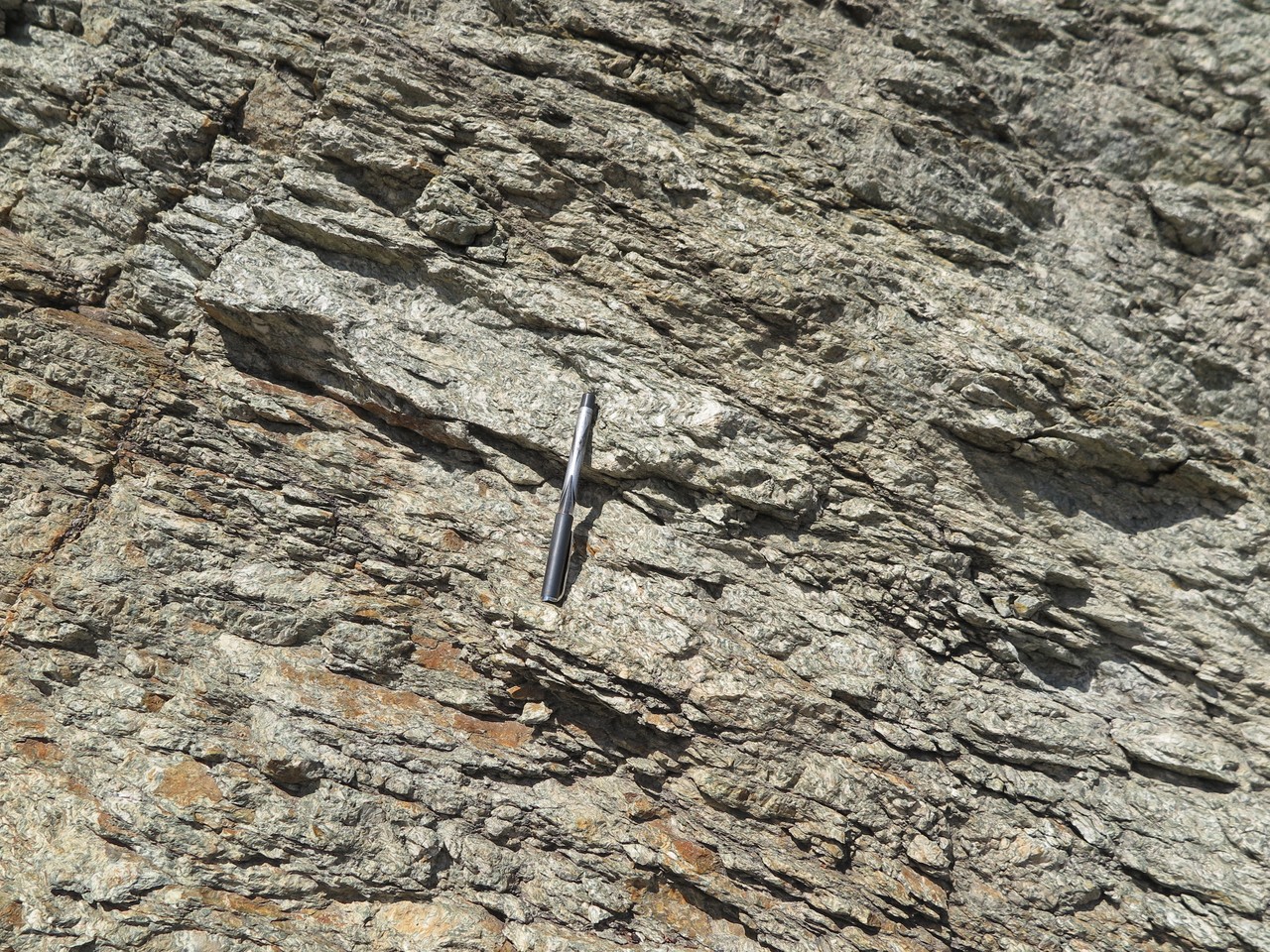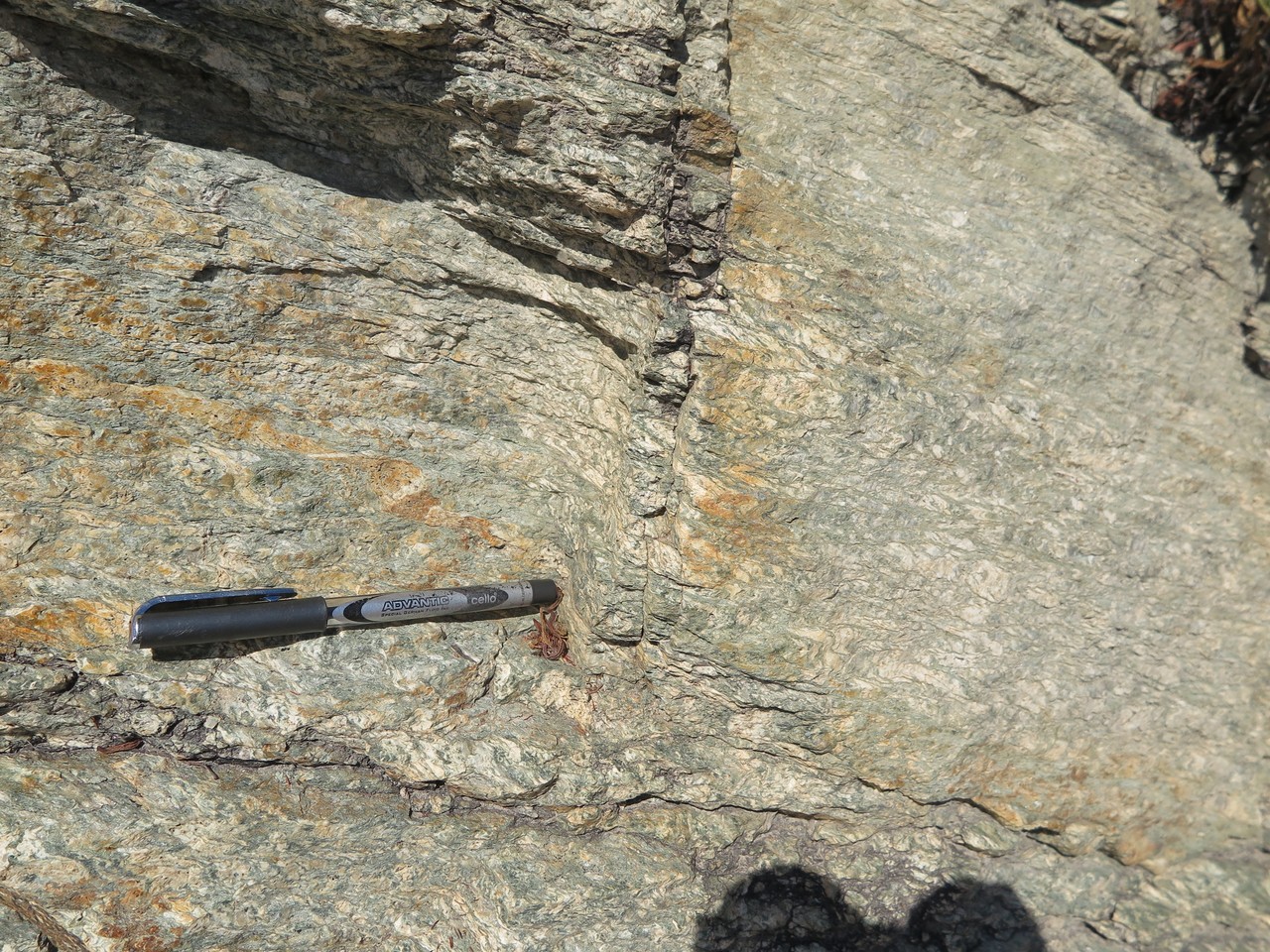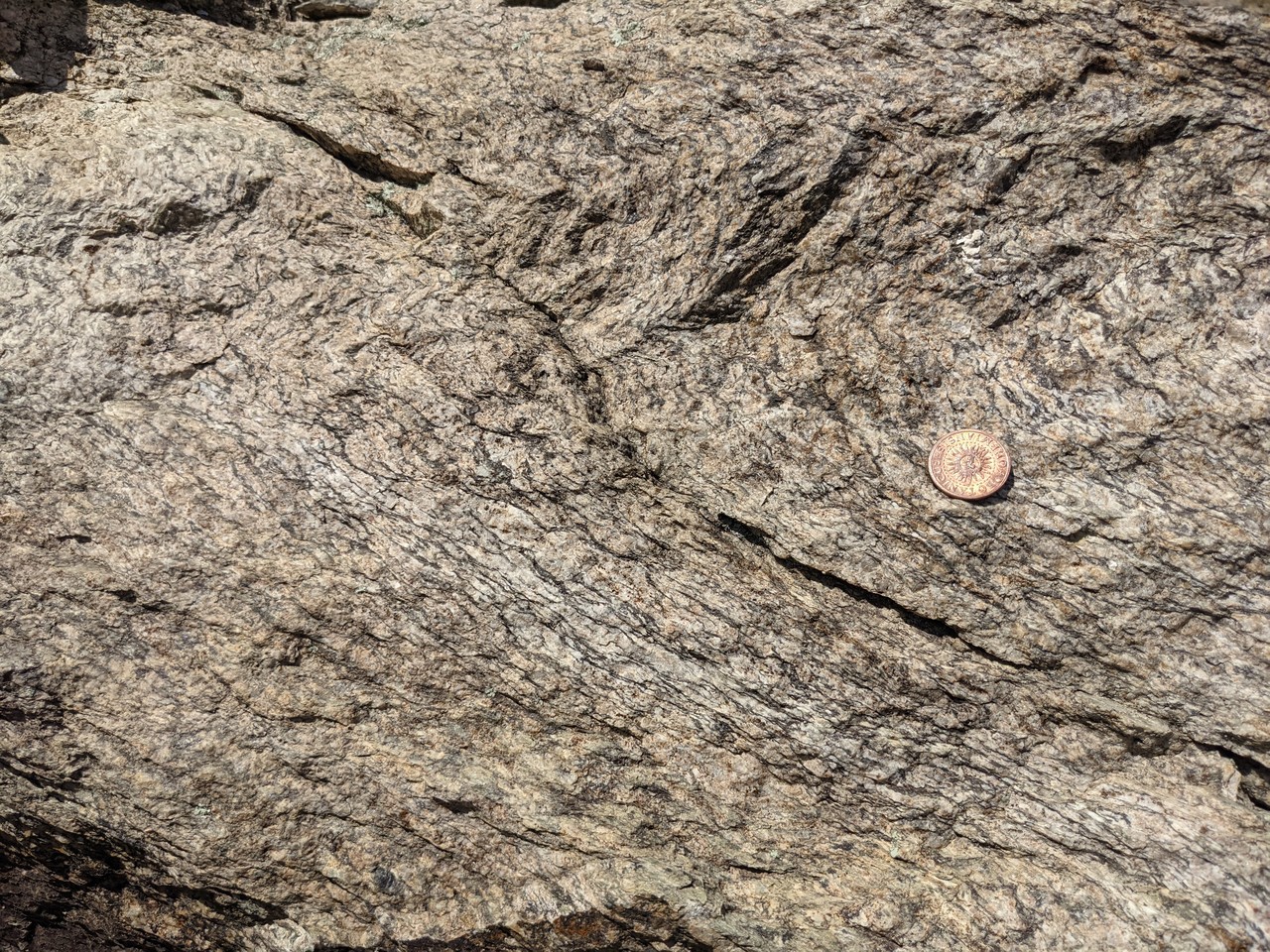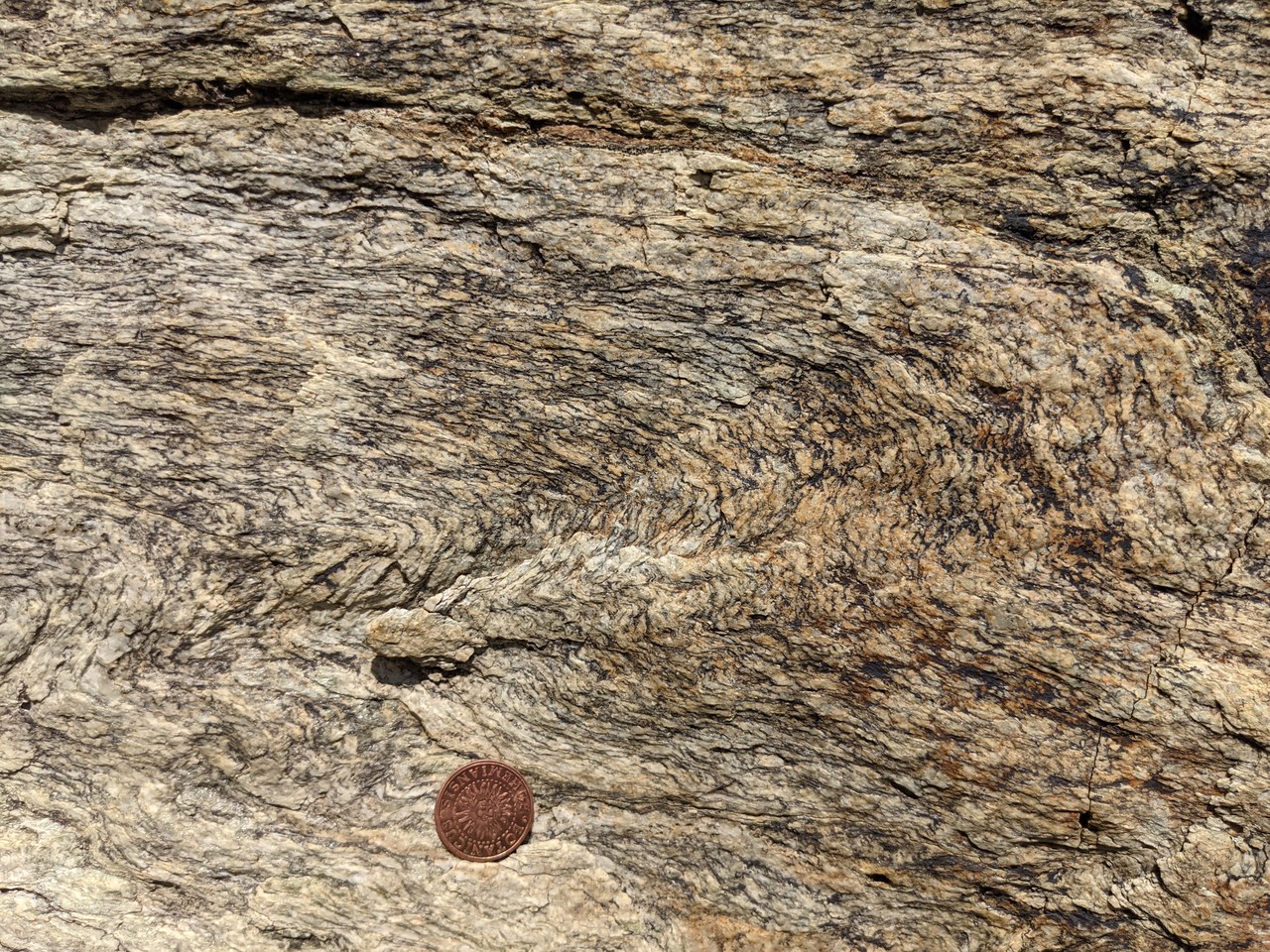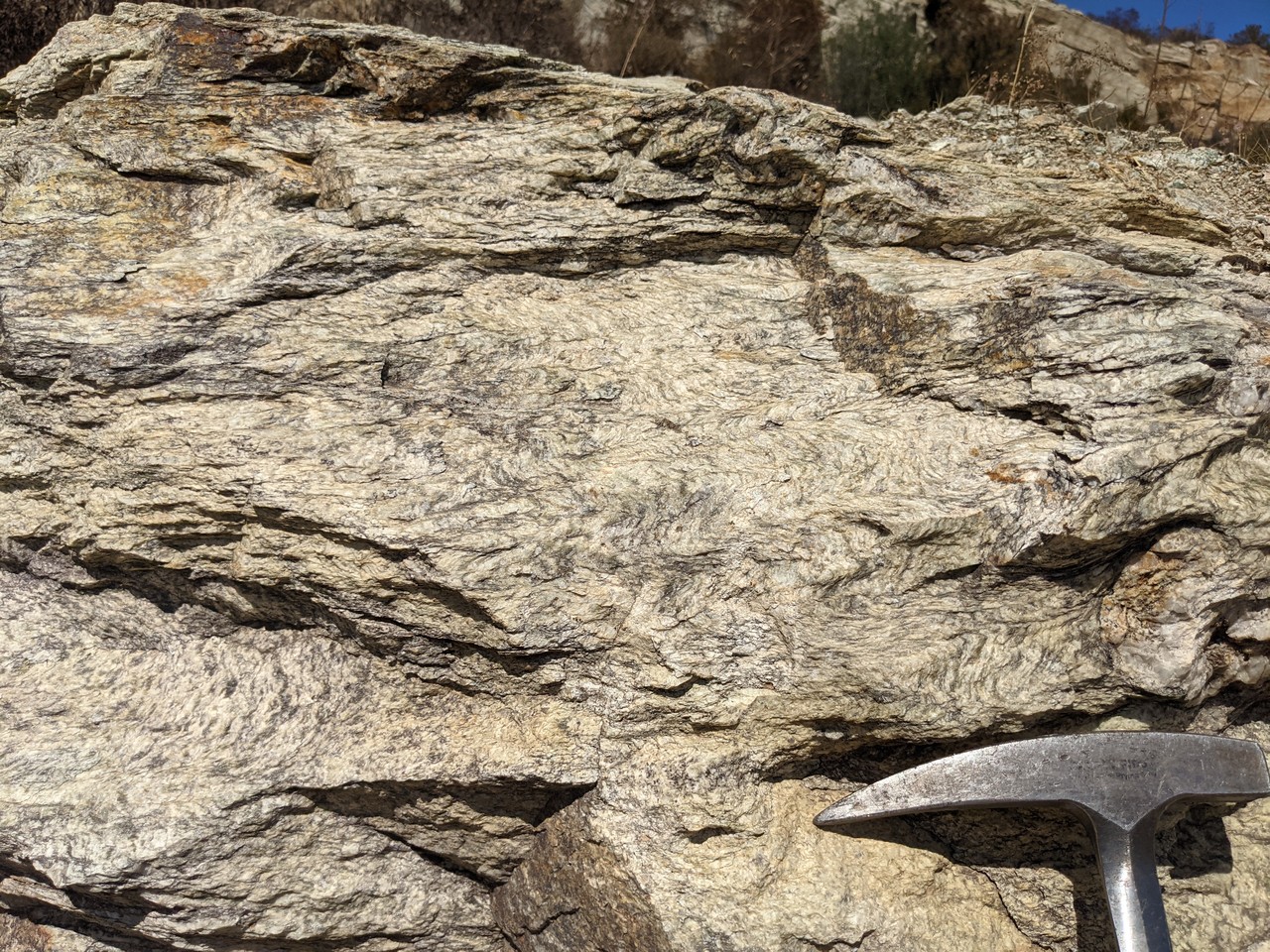
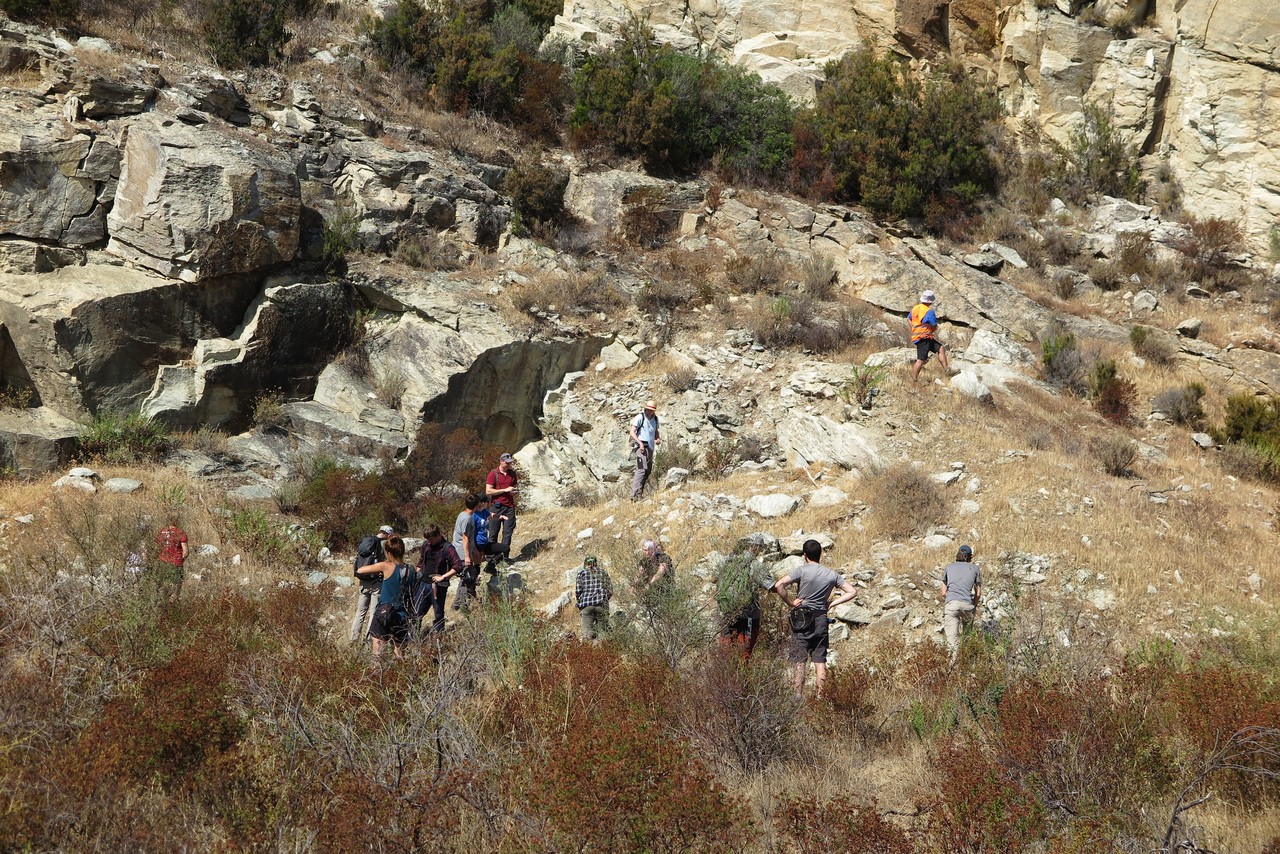
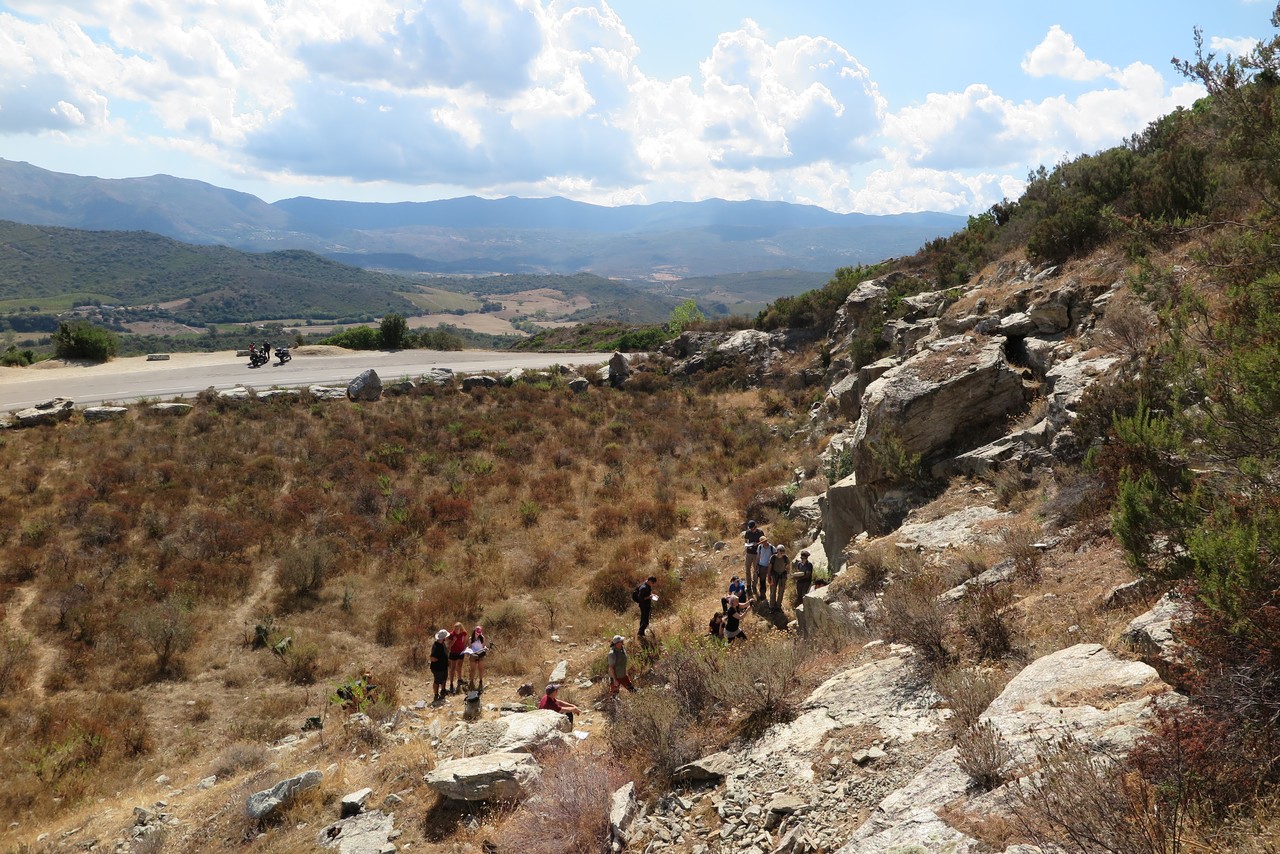
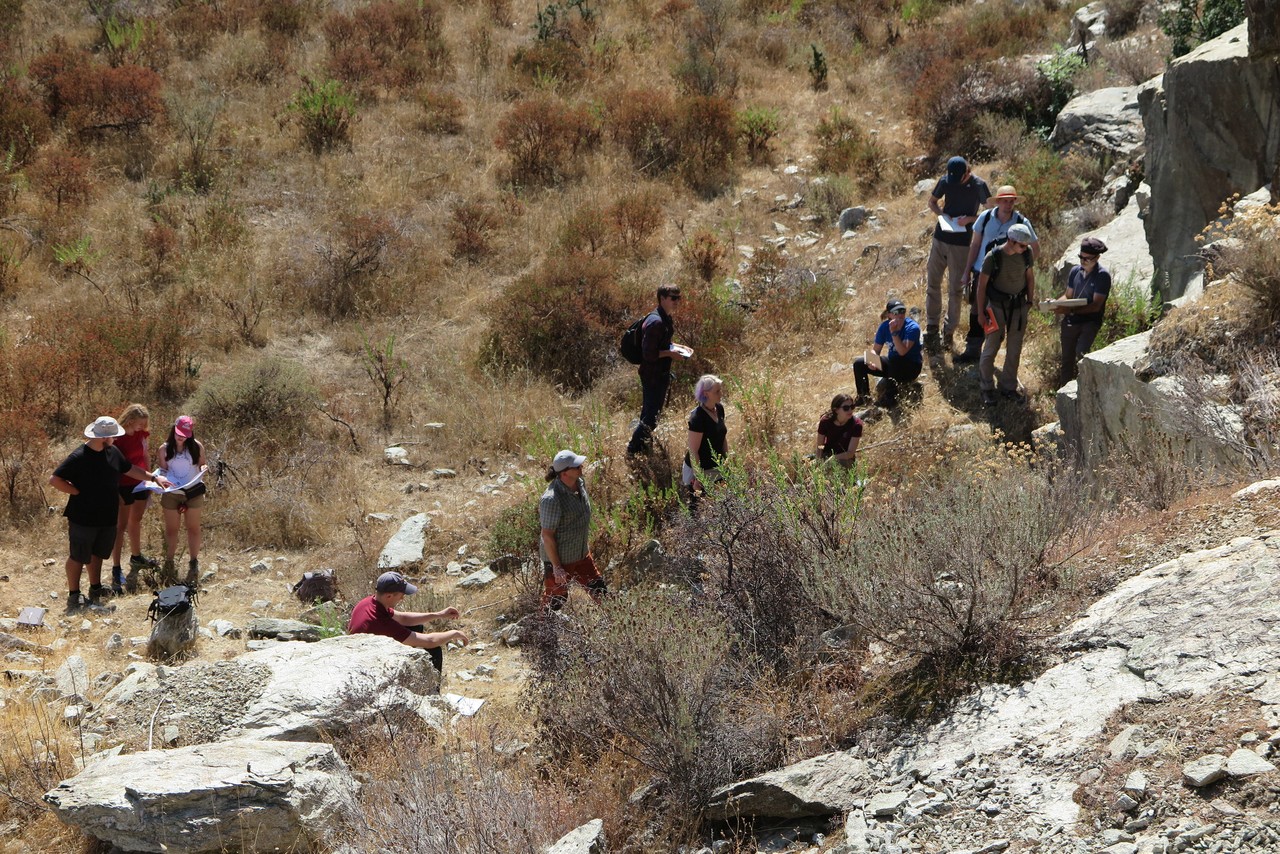
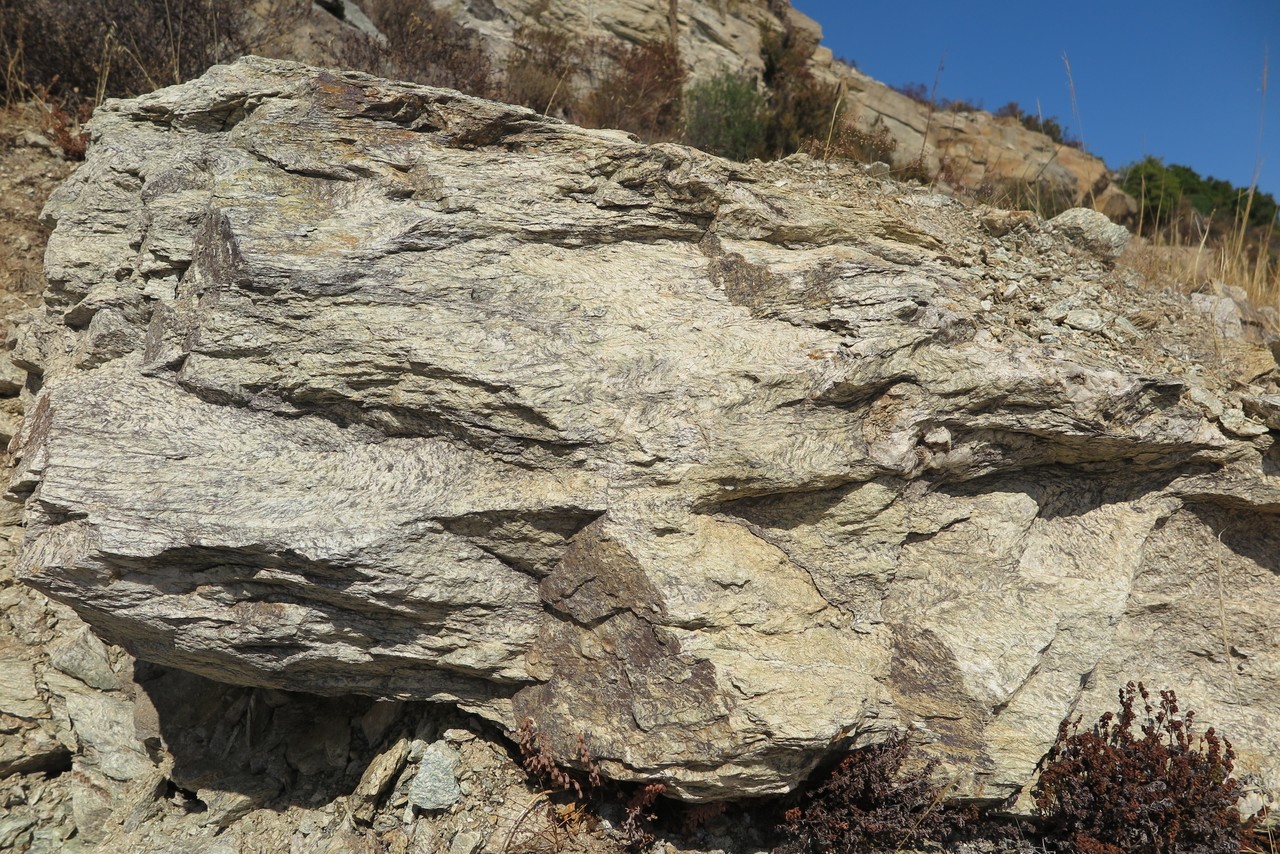
This locality is the former Fontana Morello quarry, directly at the road ca. 2 km southwest of Saint-Florent. Here, we can see patches of weakly deformed metagranites that gradually transition to gneisses with well-developed schistosity. These zones of localized deformation are interpreted as interconnected shear zones formed during the subduction and exhumation of the Tenda Massif.

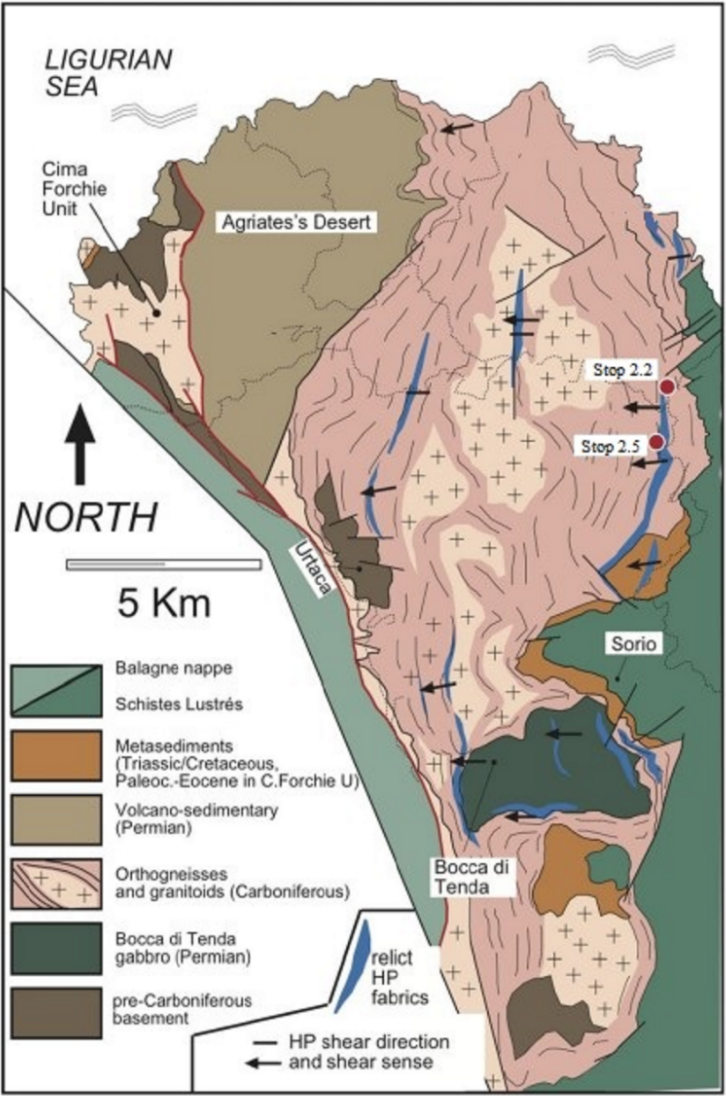
Tenda Massif shows significant variations from the north to the south of the unit near S. Pietro di Tenda: metabasites stratigraphically followed by micaschists (with a large quantity of quartz) and calcschists. On the SE edge of the Tenda massif crop out pure quartzites, marbles and calcschists. Tenda massif represents highly deformed continental crust below the oceanic units built during the surrection of the Alps on a Hercynian base at the end of the Paleozoic. The summary of the geological structure of the area is shown in the figure 1.
This locality is the former Fontana Morello quarry, directly at the road ca. 2 km southwest of Saint-Florent. We can see patches of weakly deformed metagranites that gradually transition to gneisses with well-developed schistosity. These zones of localized deformation are interpreted as interconnected shear zones formed during the subduction and exhumation of the Tenda Massif. The dominant lithology consists of gneisses with the main foliation shallowly dipping and plunging towards the east. Most of the Tenda massif represents felsic granitic lithologies as mylonites made of quartz, albite and phengite that are sometimes associated with chlorite.
Fontana Morello Quarry illustrates the heterogeneous distribution of shear strain with zones of localized ductile to brittle shearing. The NW-SE striking main foliation in the ML, which generally dips to the NE at a shallow angle, is concordant with that in the overlying Schistes Lustrés (Malavieille et al., 2011).