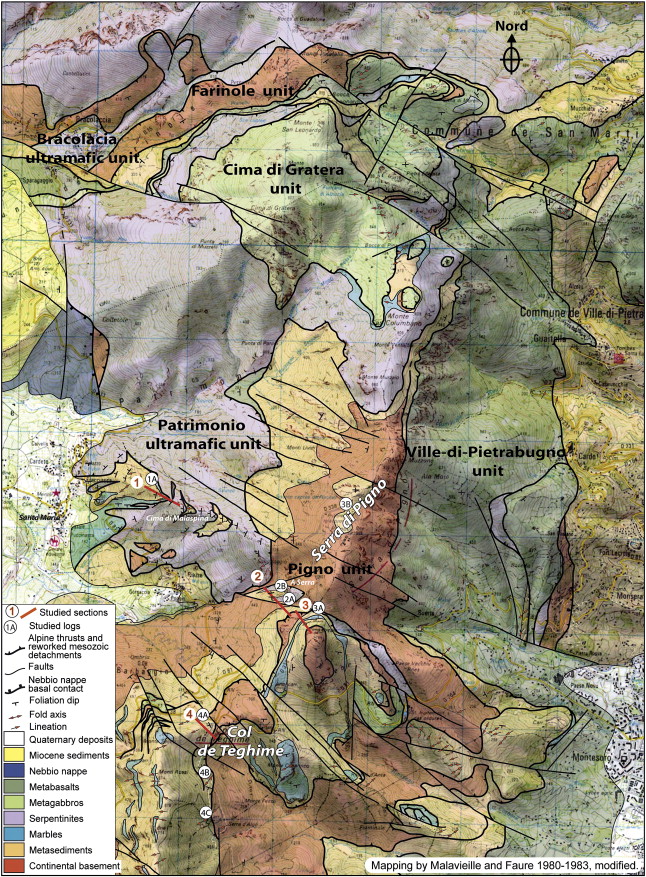
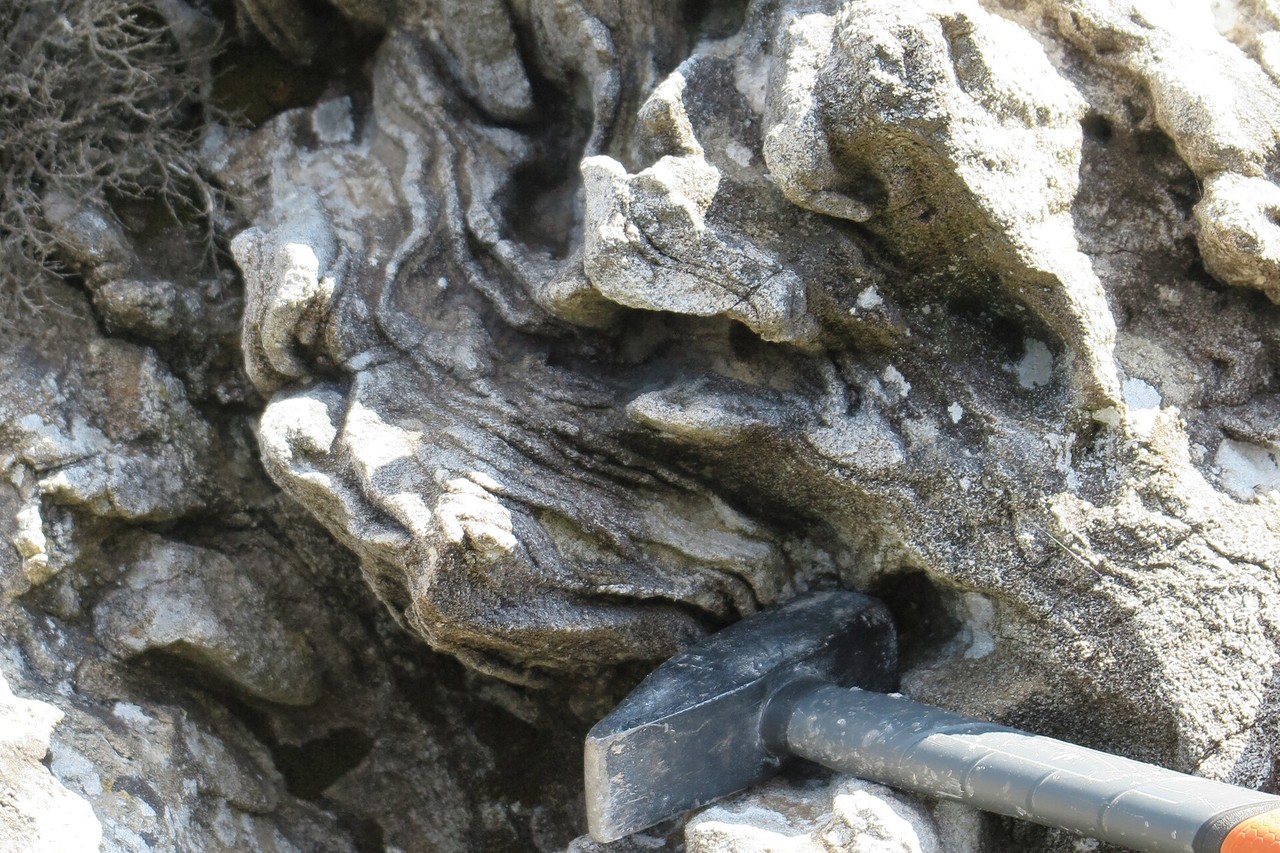
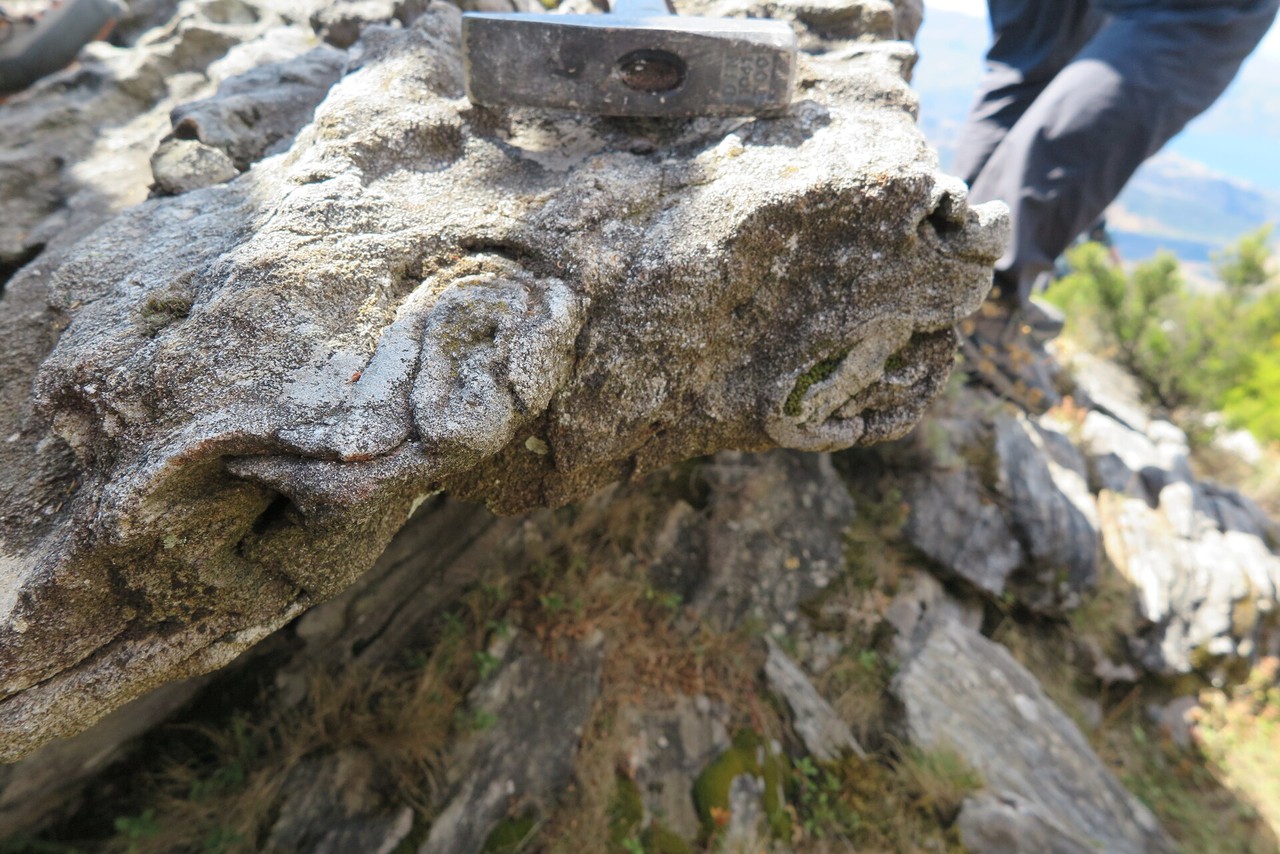
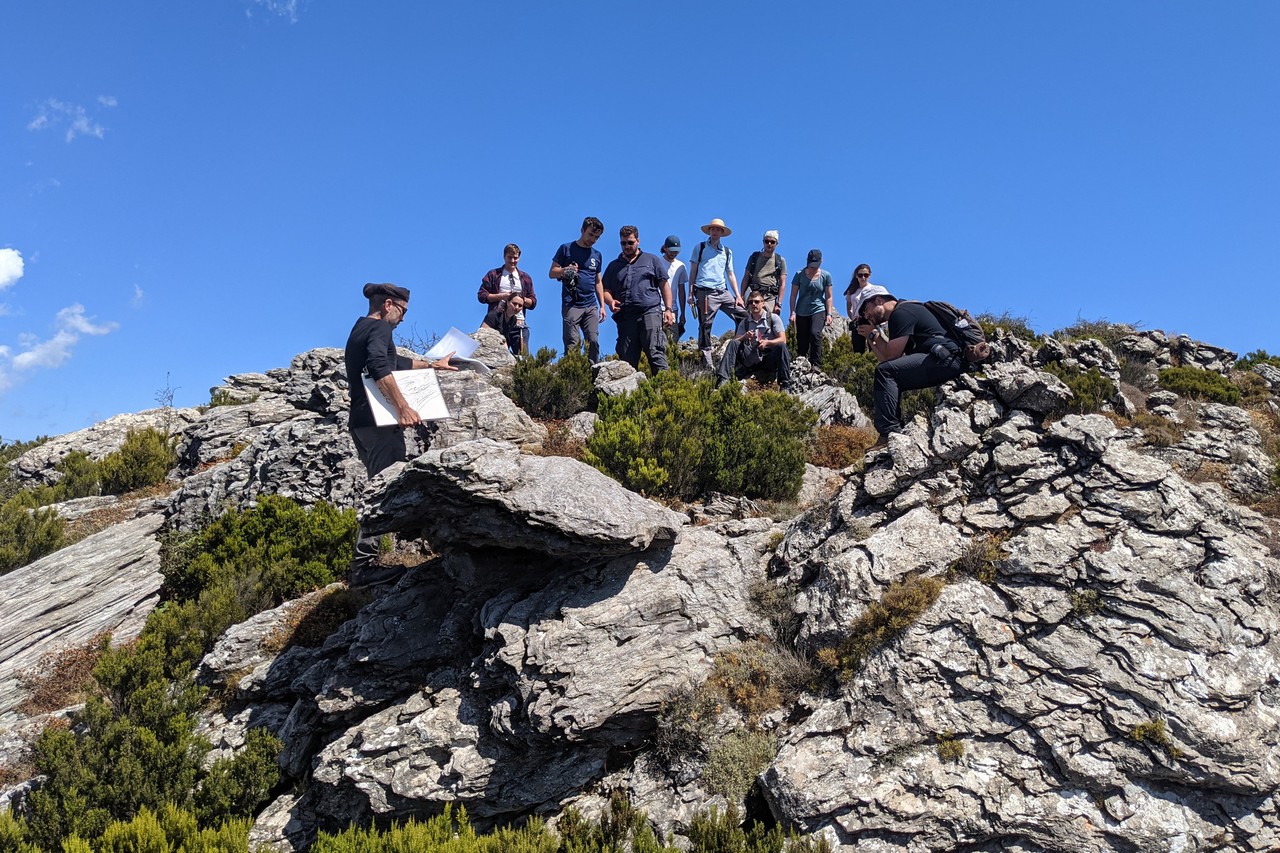
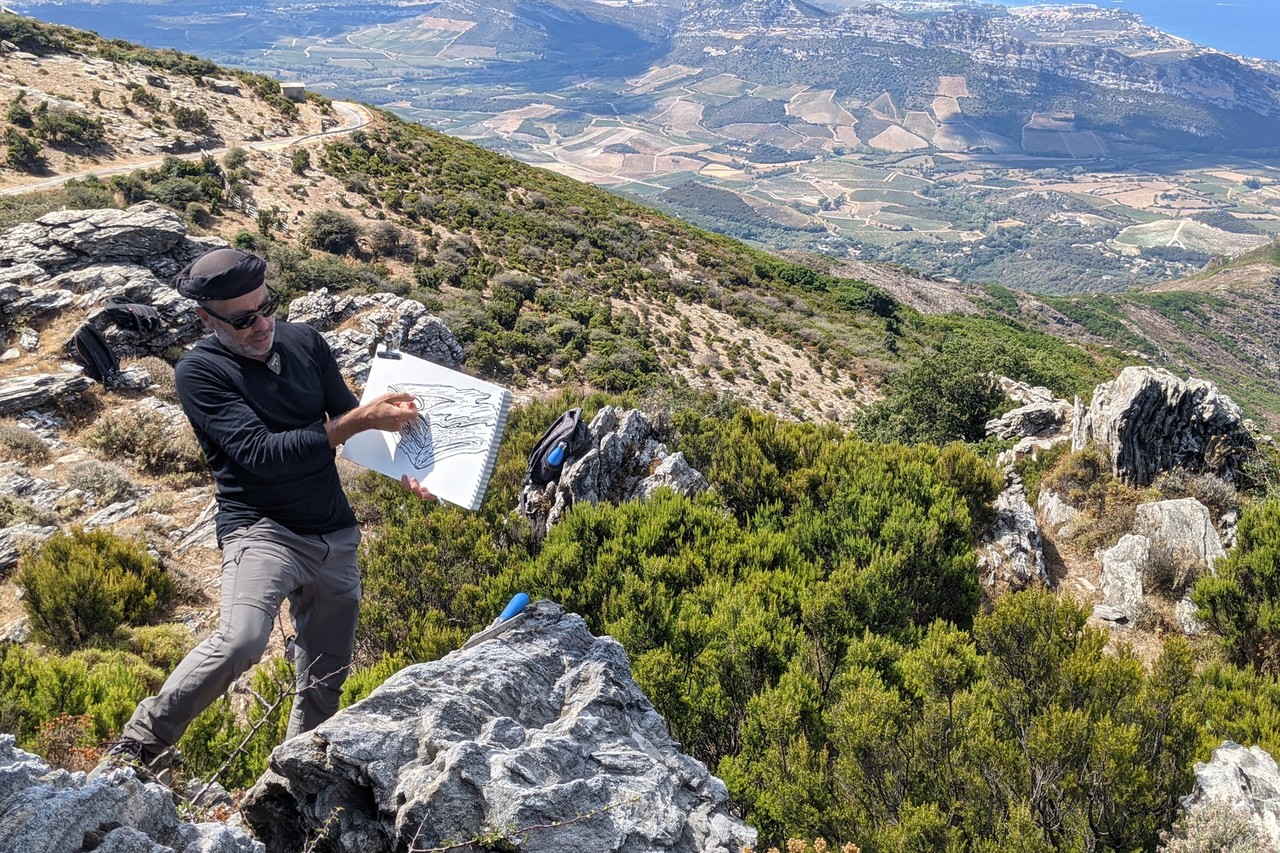
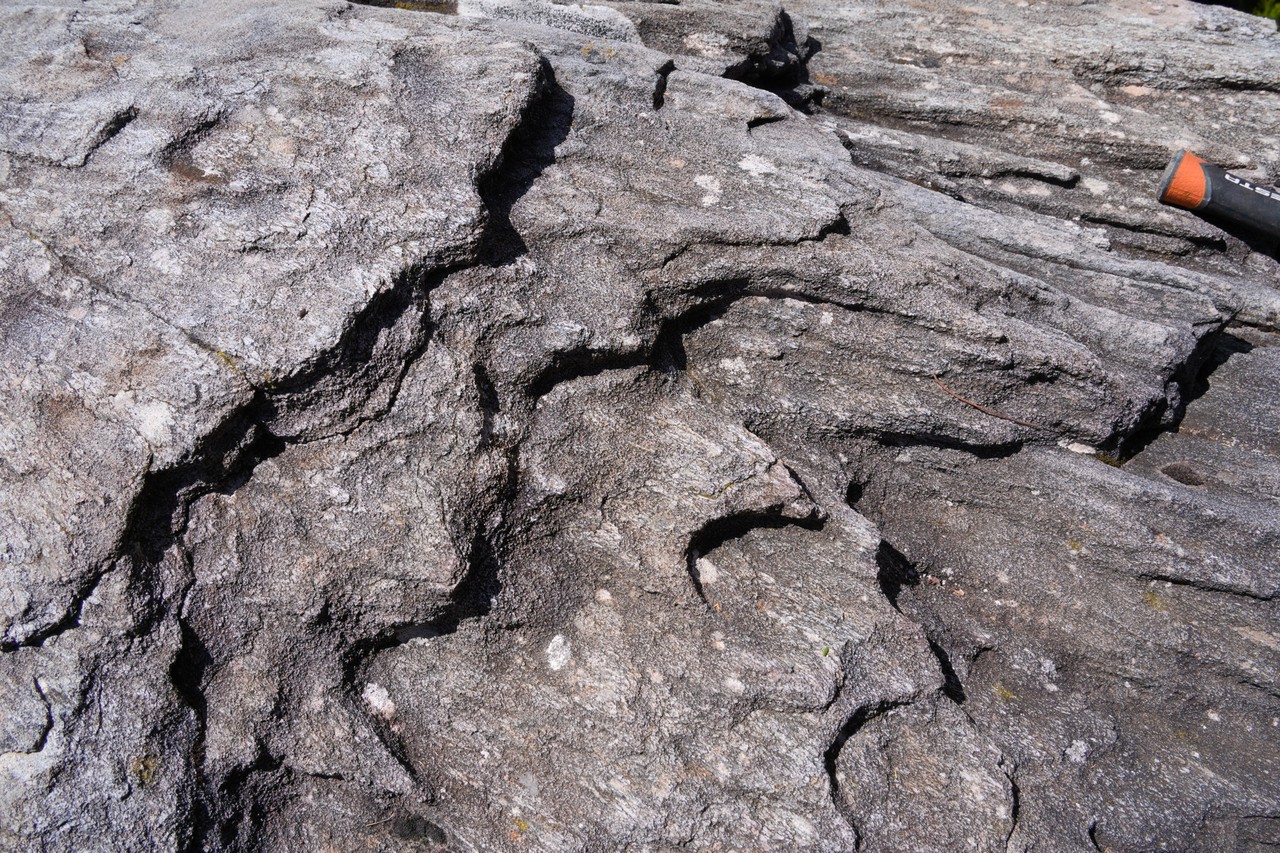
The outcrop is located on the Serra di Pigno, along the footpath heading north on the crest. Dominantly light-colored deformed felsic rocks are exposed, which contain primarily quartz and feldspar, hence they are gneisses. Shearing and flattening during deformation led to the formation of a foliation and folding of the rock. The folds we observe are cone-shaped structures called sheath folds: they reflect intense deformation because the direction of transport (marked by the conspicuous stretching lineation) is parallel to their fold axis.
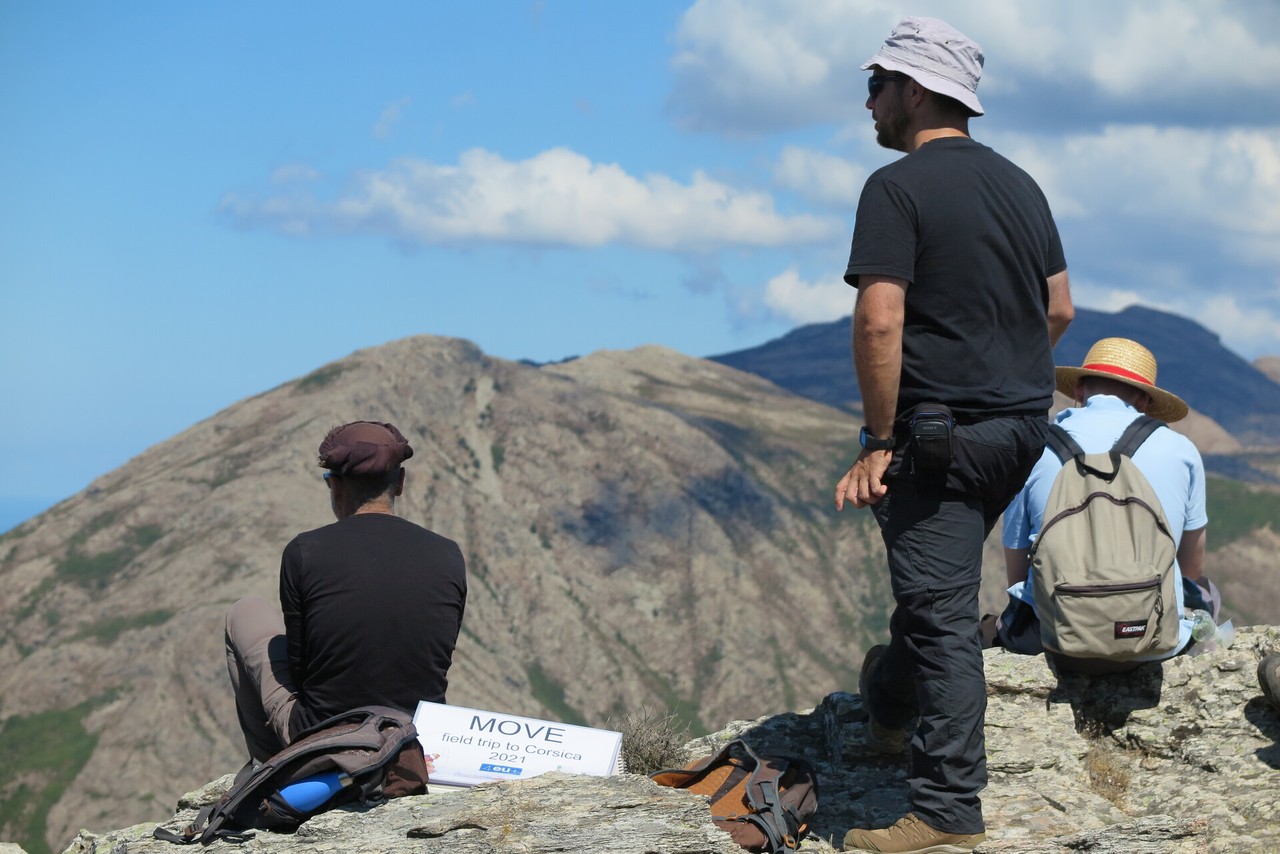
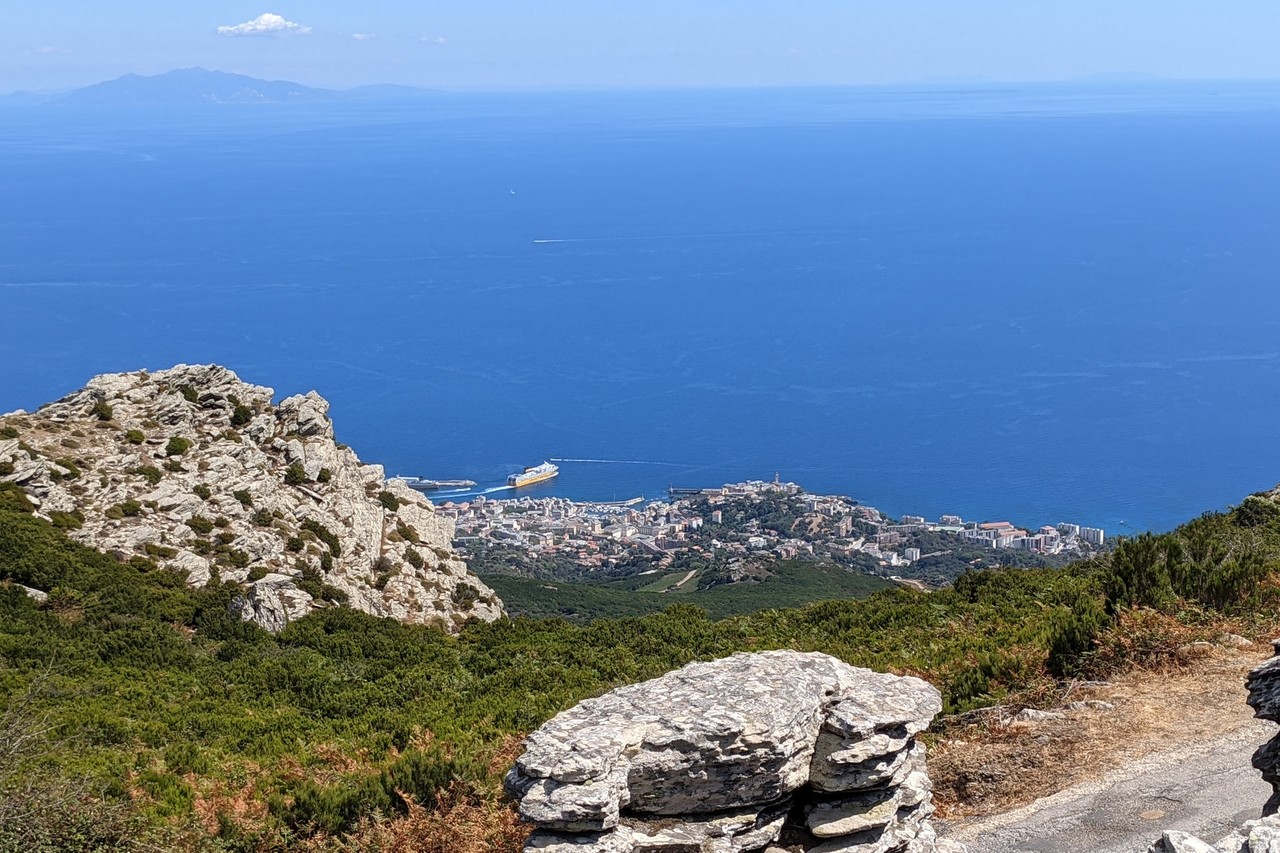
The Serra di Pigno is the largest continental sliver inherited from the passive margin and ocean-continent transition (OCT) of Corsica. The Pigno and associated alpine tectonic units are characterized by a lawsonite blueschist-facies metamorphism. P-T estimates indicate P-T conditions of about 0.6/0.8 GPa and 300±50°C in the Serra di Pigno unit and 1.0 GPa and 350°C in the overlying Campitello unit (Lahondère, 1996)